Church and Religion
Finding Stillness: Ancient Practices for Modern Life
Aug 21, 2026 By Revd James Whitfield 0 Comments

The average person now checks their phone over a hundred times a day. We wake to notifications, work through pings, and fall asleep to the blue glow of one more video. Is it any wonder so many of us feel spiritually thin — present everywhere, attentive nowhere?
Christians have faced distraction before. Seventeen centuries ago, men and women fled the noise of Alexandria for the Egyptian desert, not because they hated the city but because they loved God and wanted to hear him. The desert mothers and fathers left us three practices that still work: silence, sabbath, and slow Scripture.
1. Silence: ten minutes a day
Start embarrassingly small. Ten minutes, phone in another room, kettle off. Sit with a single verse — “Be still, and know that I am God” is a fine beginning — and let the noise settle. Your mind will wander; gently return. Stillness is a muscle, and it strengthens fast.
“We don't find God by hurrying. We find him by stopping — and discovering he was already there.”
2. Sabbath: one day that is different
The fourth commandment is the only one we treat as optional. Try this: pick one 24-hour period, put the laptop away, eat with people you love, worship on Sunday, walk somewhere green, and sleep properly. Guard it the way you guard a hospital appointment.
3. Slow Scripture: read less, chew more
Instead of racing through chapters, take five verses and read them four times: once for the story, once for a word that shines, once as a prayer back to God, once in silence. This ancient pattern — lectio divina — turns reading into meeting.

This autumn our Common Ground Groups are spending six weeks practising exactly these rhythms together — silence, sabbath and slow Scripture, one week at a time, with plenty of grace for beginners. If your soul feels thin, come and be filled. There is a chair waiting, and the kettle will be on.
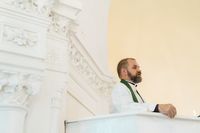
Revd James Whitfield
Vicar, Hawkridge Parish Church